
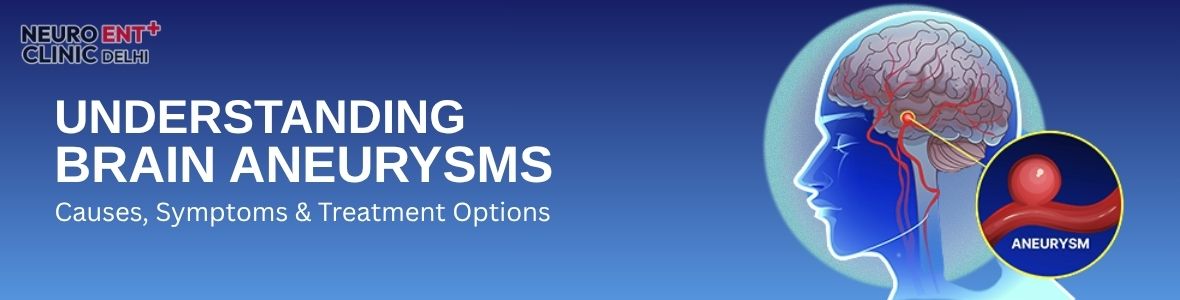
A brain aneurysm is a serious yet often silent neurological condition that can become life-threatening if left undetected. It occurs when a weak spot in the wall of a brain artery bulges outward, creating a balloon-like swelling. At NeuroENT Clinic Delhi, under the expert care of Dr. Prashant Kumar Chaudhary, Senior Consultant Neurosurgeon, patients receive advanced diagnosis and treatment using the latest Neuroendovascular and Microsurgical techniques.
The exact cause isn’t always clear, but several factors can weaken blood vessel walls and increase the risk:
High blood pressure (hypertension)
Smoking and alcohol consumption
Head injuries or trauma
Atherosclerosis (hardening of arteries)
Family history of aneurysms or connective tissue disorders
Age and gender — Women over 40 are slightly more prone to aneurysms.
Sometimes, a person may have a congenital (birth-related) weakness in their blood vessels, making them more susceptible over time.
Most brain aneurysms remain asymptomatic until they rupture. However, unruptured aneurysms can cause pressure symptoms depending on their size and location:
Persistent or sudden severe headache (“worst headache of your life”)
Blurred or double vision
Pain above or behind the eye
Facial weakness or drooping eyelid
Difficulty speaking or loss of balance
If the aneurysm ruptures, it leads to a brain hemorrhage (subarachnoid hemorrhage) — a medical emergency that requires immediate attention.
Advancements in neurosurgery have made it possible to treat brain aneurysms effectively without open surgery. At NeuroENT Clinic, patients benefit from:
A minimally invasive procedure where coils are inserted through a tiny catheter to block blood flow into the aneurysm, preventing rupture.
A small metal clip is placed at the base of the aneurysm during surgery to isolate it from normal circulation — a time-tested and effective method.
After treatment, specialized neurorehabilitation helps patients recover strength, speech, and coordination for a faster, healthier return to normal life.
A brain aneurysm doesn’t have to be a death sentence. With timely diagnosis and expert care, recovery is possible. If you or a loved one experiences any of the warning signs, consult Dr. Prashant Kumar Chaudhary at NeuroENT Clinic Delhi — where Every Brain Matters, Every Life Counts.
Welcome NeuroENT